
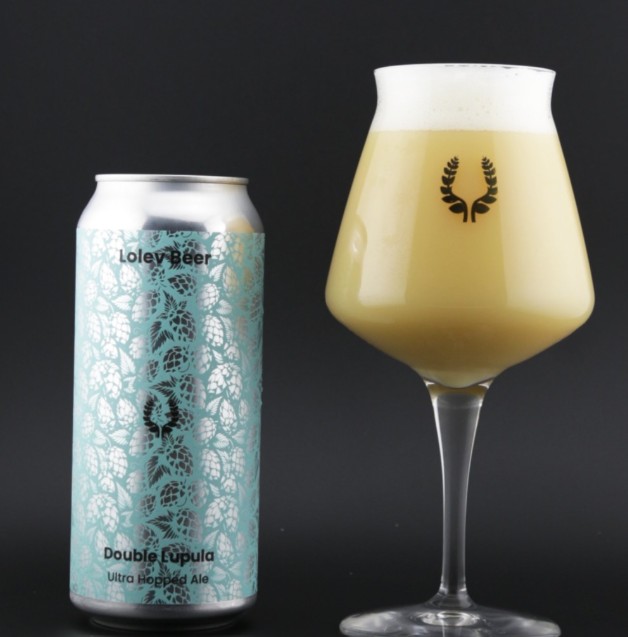
One thing about brewers is that they love to innovate. Brewing has been around for thousands of years, and some of the beer we drink today is vastly different than what our ancestors drank. Modern malt kilning and roasting alone is what gives a current day brewer the ability to control their malt profiles in ways brewers from a couple centuries ago couldn’t. Brewing, at its heart, is a science. It is this convergence of science and creativity that begets innovation, and us beer drinkers reap those benefits.
One of these contemporary beers is Hoppy Ales, or Ultra Hopped Ales. Defining what these beers are has been a point of contention amongst brewers and consumers alike. Currently, there are no specific style guidelines, like from the BJCP (Beer Judge Certification Program) or the Brewer’s Association. However, that hasn’t stopped breweries like Troon, Monkish, RAR, Lolev, and local favorite Threat, from making the style. So what is a Hoppy Ale, and how is it different from the hop-forward beers that we are already familiar with?
First of all, if we had to assign a style to these beers, they would fall under the Juicy/Hazy Imperial or Double IPA category as described by the Brewers Association.
So what makes a Hoppy Ale different?
MALT
- One defining characteristic for a Hoppy Ale is the alcohol content, usually 8% or higher. This means more grain. The reason for this is not necessarily to get you drunk quicker, but to help with extracting all of the hoppy goodness.
- The malt bills for these beers contain a very high ratio of oats and wheat relative to base malt. This contributes to a fuller body and a subtle “chewy” mouthfeel.
HOPS
- IPAs or Double IPAs are usually dryhopped at around 2 to 5 pounds per barrel. Hoppy Ales usually start at 7 pounds per barrel. The science says that at a little above 2 pounds per barrel, you get diminishing returns on the flavors and aromas that are being extracted into the beer. However, there is still a reason to add more hops, otherwise breweries wouldn’t be making these Hoppy Ales.
- When and how you add these hops matter. We reached out to Lolev to see what they had to say about it, “some breweries might refer to something like these as triple dryhopped or quadruple dryhopped, but we felt like even the term ‘double dryhopped’ was subjective to the brewery using it.” And they are absolutely right to say that. Starting with a single dry hop, consider, what is a double dry hop? Is it dry hopped twice, or twice the hops? Nonetheless, Hoppy Ales/Ultra Hopped Ales have a lot of hops in them and each brewery making these beers has their own way of adding them.
- Over the past decade or so, brewers have transitioned from just T90/T45 to now supplementing their use with various forms of hop extracts. That last part is very important to this style, and any hop-forward beer. When a brewer adds large amounts of hops to a beer, you not only get the pleasant terpenes, but a noticeable vegetal flavor as well. This is what you are tasting when a hoppy beer is “green”. In a normal IPA/DIPA this greenness usually subsides around 2-4 weeks after packaging. In Hoppy Ales, this conditioning time is even longer at about roughly 6-8 weeks.
- Hops, like wine grapes, fluctuate as a result of their variety and the terroir they are grown in. Freestyle brand NZ Cascade packs more fruity characteristics relative to its American-grown sibling that you would find from a provider such as Yakima Chief or Haas. In fact, Freestyle and Eggers hop farm’s HQs, located in New Zealand, are about a 12 minute drive from each other, and they are arguably putting out some of the best aroma hops in the world right now.
No matter how you may define the style, Hoppy Ales are probably sticking around for a while. Follow us on Instagram, or join our mailing list, to stay posted on when we get some of these beers in stock!
Facebook Comments