Underrated Beer Styles Worth Your Attention: Dark Lager, Barleywine, and English Mild
Some of the best beers in the world get ignored. They sit on shelves while IPAs and sours grab all the attention. Underrated beer styles rarely have good marketing behind them. They do not trend on social media. They just taste really good and quietly wait for someone to notice. This post covers three of them — dark lager, barleywine, and English mild — and makes the case that each one deserves a far bigger audience than it gets.
Dark Lager: The Style That Changes How You Think About Dark Beer
Most people hear “dark beer” and picture something heavy, bitter, and hard to finish. A lot of people think “oh guinness? No thank you” which is absolutel not the case. That assumption kills dark lager before it gets a fair shot.
What Is Dark Lager, Actually?
Dark lager covers a few related styles — Munich Dunkel, Czech Tmavé, and Schwarzbier among them. What unites them is a clean lager fermentation with a malt-forward, roast-free character. The darkness here comes from caramelized and toasted malt, not the heavy roasted grain that defines stouts and porters. That distinction matters a lot. A stout reads as coffee and char. A dark lager reads as caramel, toast, bread, and dark fruit — with a clean, crisp finish underneath.
The Czech version of dark lager, called Tmavé (pronounced roughly “tmah-vay”), adds another layer of complexity. Czech brewers often use a traditional process called decoction mashing, where portions of the mash get boiled separately and returned to the main vessel. Decoction mashing gives the beer a depth and richness of malt flavor that is very difficult to replicate any other way. The result is a beer that feels fuller and more complex than its modest ABV suggests.
The flavor profile can include bread crusts, toast, nuts, cola, dark fruit, or caramel, with roasted characters like chocolate or sweetened coffee possible but never dominant enough to overwhelm the malt base. The key word for a well-brewed Czech dark lager is balance — it should not be too sweet, too bitter, too roasty, or too caramelized, with no single characteristic dominating the flavor profile.
What Does Dark Lager Taste Like?
Pour it and you see a deep ruby-brown color with a creamy tan head. The aroma delivers malt front and center — caramel, toasted bread, maybe a hint of cocoa or dark fruit. Hop presence is low and earthy, just enough to keep the sweetness in check. The finish runs cleaner and crisper than you expect for a dark beer. It drinks more like a refined, flavor-packed lager than like a stout. That’s the whole point.
Czech brewers describe pitelnost — extreme drinkability — as a core quality of a great dark lager. The goal is to make it just as drinkable as pale lager, so the beer never feels too heavy or too flavorful to finish another glass.
Beers We Have In Store
Tmavy — A solid example of the Czech dark lager style done right. Rich, malt-forward, and clean on the finish. This is the style at its most approachable.
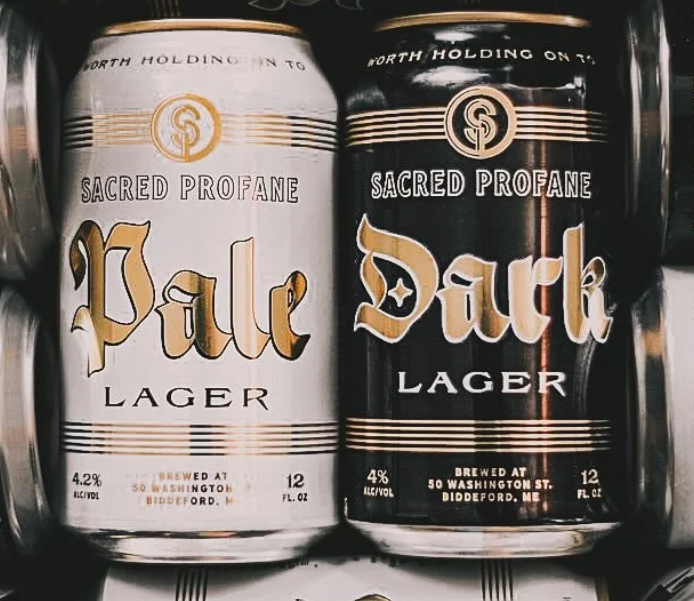
Sacred Profane Dark Lager — Sacred Profane is a Maine brewery with an extraordinary story. Co-founded by veteran brewers Brienne Allan and Michael Fava, the brewery brews only two beers — a pale lager and a dark lager — both at or just above 4% ABV. They use under-modified malts with three decoction steps, open fermentation, and a Czech yeast strain for lower sulfur and lower attenuation.A brewery that bets everything on two lagers has to nail both. They do.
How to Drink It
Serve dark lager between 42–48°F. A clean pint glass or a traditional Czech dimpled mug works perfectly. Pair it with roasted meats, goulash, grilled bratwurst, or dark bread with aged cheese.
 Barleywine: The Beer That Thinks It’s a Digestif
 Barleywine: The Beer That Thinks It’s a Digestif
Barleywine makes people nervous. The name confuses them. The ABV intimidates them. The bottle sits on the shelf collecting dust while drinkers reach for something more familiar. That is a mistake. Barleywine is one of the most age-worthy and complex styles in all of brewing, with flavors like toffee, caramel, dark fruit, dried fig, molasses, and warming alcohol.
What Makes It a Barleywine?
Barleywine is a strong ale, typically 6–12% ABV, and the use of the word “wine” reflects its alcoholic strength — similar to a wine, but made from grain rather than fruit. Bass No. 1 Ale, around 1870, became the first beer marketed under that name. Anchor Brewing brought the style to the United States in 1976 with Old Foghorn. It is not the most common style, but it is one of the most rewarding.
English vs. American — Know the Difference
Two distinct versions of barleywine exist, and understanding the difference helps you pick the right one.
English barleywines deliver flavors of toffee and bread with dark fruits like plums, raisins, and dried figs. The alcohol should feel soft, not aggressive. When aged, an English barleywine can take on port-like qualities — chewy, warming, and deeply malty.
American barleywines push harder on hops, with an aggressive hop character of big citrus or pine coupled with a bready malt backbone. Both versions are full-bodied and rich. The American version leans forward. The English version leans back.
The Beauty of Aging
Barleywine actually gets better with age. The high alcohol acts as a natural preservative. Fresh barleywines can taste rough, with prominent alcohol heat and unintegrated flavors. Given six, twelve, or even twenty-four or more months in the cellar, the hop bitterness mellows, the alcohol warmth softens, and the malt character deepens into something that genuinely resembles a fine port or sherry.
Bottles We Have In Store
Three Floyds Behemoth — This is a landmark American barleywine out of Munster, Indiana. Behemoth delivers complex caramel and malt notes balanced by generous hopping and a high alcohol content, at 10.5% ABV. The aroma brings caramel malts, dark fruit, light spices, and piney hops. The flavor runs sweet until the finish, which carries noticeable alcohol warmth and a slick, full mouthfeel. The BJCP officially lists it as a commercial example of the American barleywine style. That says something.
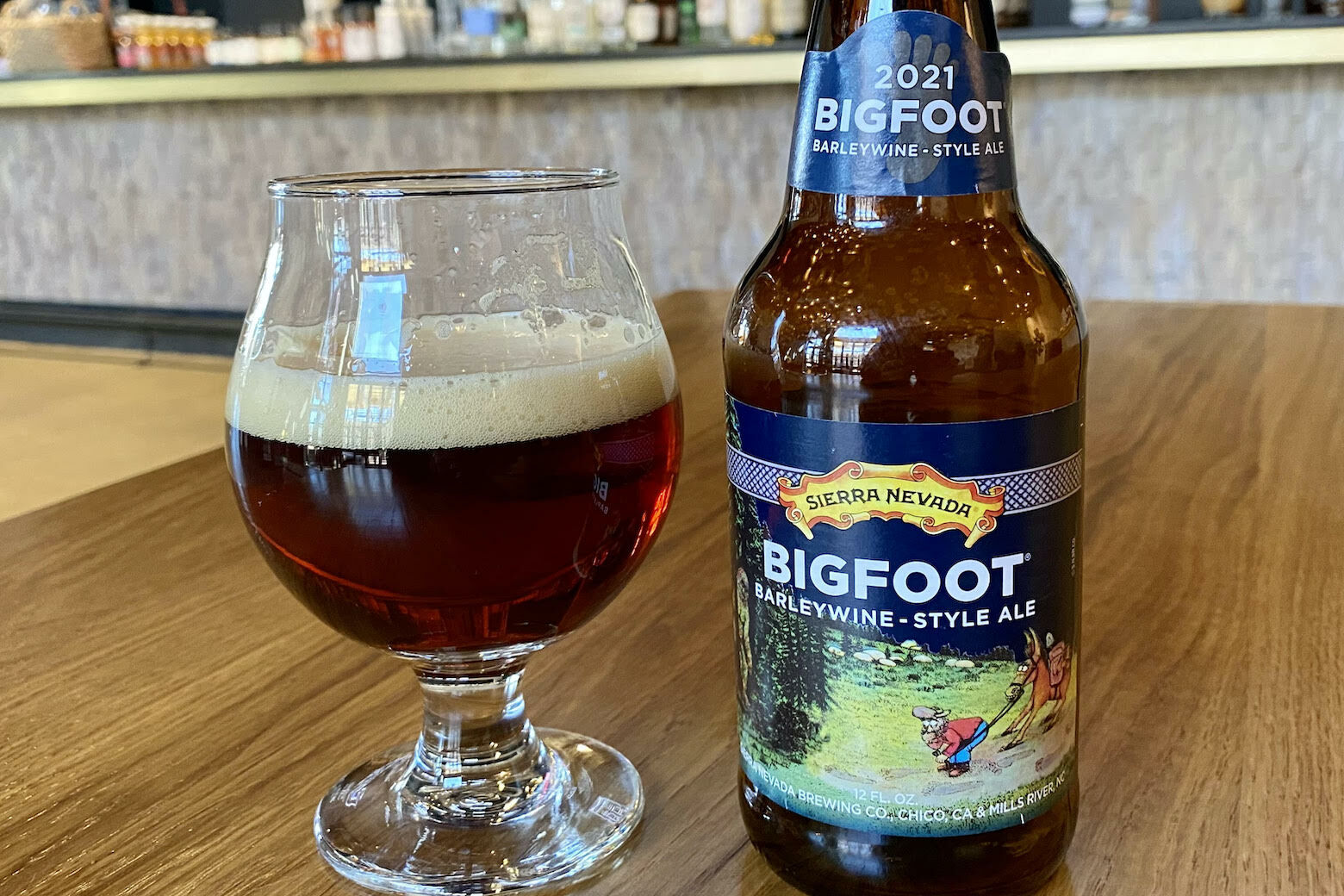
Sierra Nevada Bigfoot — Sierra Nevada released Bigfoot in 1983, making it the second barleywine ever labeled in the United States. Bigfoot runs 9.6% ABV and earns praise from collectors for its supreme ability to age in the cellar. Look for bold caramel, toffee, and pine resin alongside brown sugar, dried cherry, fig, raisin, and floral hop notes from classic West Coast varieties. Buy a couple. Drink one now. Save one for next year.
Anchorage A Deal With The Devil — If you can find this one, Dave highly reccomends it. It starts with a gravity of 37 Plato and ages eleven months in Cognac barrels, with Galaxy hops adding a distinct tropical and floral dimension alongside the malt. The result is one of the most complex and widely praised barleywines in American craft brewing. Reviews consistently describe it as chewy, boozy, caramel-drenched, and loaded with barrel character.
How to Drink It
Use a snifter or tulip glass. Serve barleywine at 50–55°F. Too cold and the flavors go mute. Pour a smaller serving — at 8–12% ABV, a full 12-ounce pour is the equivalent of two standard beers. Sip it slowly. Pair it with aged blue cheese, caramel desserts, or just enjoy it on its own by a fire. It is that kind of beer.
English Mild: The Pub Beer That Never Gets Its Due
English mild is one of the most overlooked styles in all of craft beer. It is sessionable, complex, and made with real craft intention. Most people walk right past it. That is partly the style’s own fault — the word “mild” does not exactly sell the experience. But the name does not refer to a lack of flavor.
What Does “Mild” Even Mean?
 What Does “Mild” Even Mean?
The term “mild” historically refers to the beer’s understated hop character, not its flavor. The flavor can actually be quite rich and complex for its typically low alcohol strength. Milds typically run 3–4% ABV. Originally, mild simply meant a young beer that was not yet aged or heavily hopped, and it was available in a wide range of strengths. Its affordability and approachability made it incredibly popular during the Industrial Revolution, when factory workers wanted a flavorful pint with lower alcohol after long shifts.
By the early 20th century, mild accounted for more than three-quarters of all beer brewed in Britain. Then lagers and bitters rose in popularity, and mild faded. Today it sits in a corner of the craft beer world where only the curious find it.
What Does English Mild Actually Taste Like?
The dominant character is malt — caramel, toffee, and sometimes chocolate or coffee in darker versions. Hop bitterness stays very low to minimal, there just enough to keep the malt in balance. The mouthfeel runs medium-light. Carbonation is moderate to low, which is authentic to the style. Dark milds pour deep amber to brown and carry soft dried fruit notes alongside the malt. Pale milds run copper to amber and show a lighter, breadier character.
The key is density of flavor relative to alcohol. A great mild delivers caramel, toast, and gentle fruit at 3.5% ABV. It tastes like more beer than it is. That makes it a genuinely rare achievement in brewing.
Beers We Have In Store
Forest & Main Mild (Ambler, PA) — Forest & Main is one of the best breweries in Pennsylvania, and their mild is a standout example of why. We are getting two, Dark Mild and Fellow. The mild delivers toasted toffee with subtle coffee notes — balanced, flavorful, and light in body. Untappd reviewers call it one of the best beers they’ve had in a long time.
How to Drink It
Serve English mild between 50–55°F in a pint glass or mug. Let it come up from refrigerator temperature a few minutes before drinking. The flavor opens up dramatically. Pair it with cheddar and fresh bread, roasted chicken, or mild sausages. It also makes an excellent session beer for a long afternoon — low enough in alcohol to stay comfortable, complex enough to stay interesting.
Why These Styles Keep Getting Overlooked
All three of these styles share a common problem. They do not perform well in a quick sip at a beer festival. Dark lager needs a few sips to reveal its complexity. Barleywine needs warmth and time to open up. English mild is so quiet and understated that it disappears against bold competition. None of them announce themselves loudly.
But that is also exactly what makes them worth drinking. These are not beers built for a first impression. They reward patience, attention, and curiosity. If you pick up one of these the next time you visit, give it the space it needs. You might find that the underrated beer you almost walked past becomes your new favorite.
Come in and explore all three while they are in stock, and check out March Mildness in all its glory!
Facebook Comments