
Doppelbock Beer: The Big, Malty Lager You Should Know
Doppelbock beer has one of the best origin stories in all of brewing. Monks brewed it to survive Lent. Drinkers called it liquid bread. Centuries later, it still earns that reputation. Rich, warming, and loaded with malt complexity, doppelbock beer is one of the most rewarding styles you can explore — and here is everything you need to know before you grab one.
Bock vs. Doppelbock — What Is the Difference?
This trips people up all the time, so let’s clear it up fast. A bock is a strong German lager. It typically runs 6.3–7.6% ABV and tastes rich and toasty with a soft sweetness and very low hop bitterness. The color ranges from copper to brown. It’s a hefty beer, but it’s approachable.
A doppelbock takes everything about a bock and turns it up. The name literally means “double bock.” While they share a lineage, the “double” signals a stronger, richer, and more intensely flavored beer. Doppelbocks typically run 7–10% ABV, sometimes higher. The malt character runs deeper. The body runs fuller. The finish carries noticeable alcohol warmth, especially in the colder months. Consequently, dark fruit notes like raisins and plums are common alongside caramel and toasty aromas. Some examples show hints of chocolate. Hop aroma is virtually absent.
One more thing worth knowing: doppelbocks are lagers, not ales. Stouts and porters use roasted barley and are ales. Doppelbocks use heavily toasted and caramelized malts and ferment cold as lagers. So if you taste a doppelbock and think “this isn’t as bitter or roasty as a stout,” that’s by design. The darkness here comes from caramelized malt sweetness, not from the sharp bite of roasted grain. Additionally, carbonation runs moderate to low.
The History: Monks, Fasting, and Liquid Bread
The modern doppelbock style was made famous by the brewing monks of St. Francis of Paula in Munich during the 17th century. Monks brewed it as a more substantial beer to sustain them during lengthy fasts, particularly the Lenten season. The strong beer earned the nickname “liquid bread” for its satiating qualities.
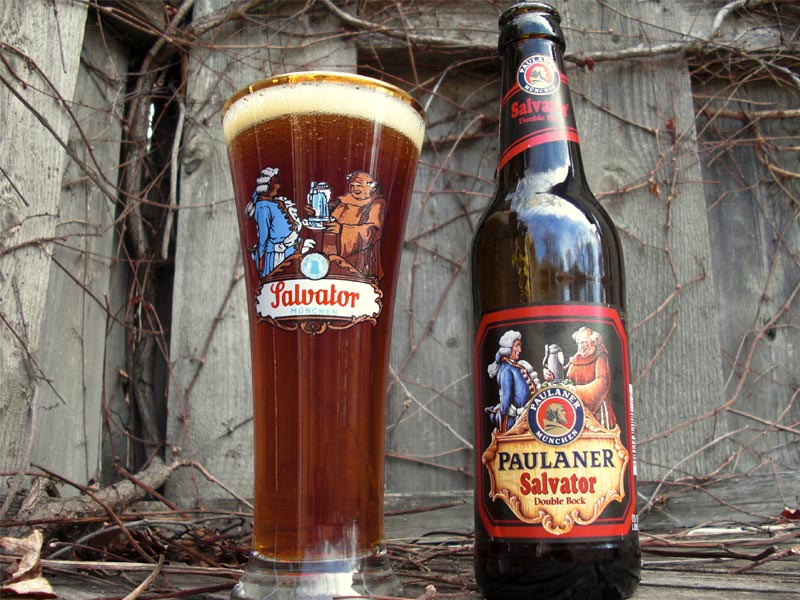
The monks named their beer “Sankt-vater-bier” — Blessed Father Beer. That name eventually shortened to “Salvator,” meaning Savior, which Paulaner still holds as a trademark today. Once other breweries tried to cash in on the Salvator name, courts intervened. A 19th-century court ruling restricted the name “Salvator” to Paulaner alone. Other breweries responded by adopting names ending in “-ator.” That tradition sticks today, over 200 years lator.
In 2011, journalist J. Wilson put the liquid bread claim to the test by drinking only doppelbock and water for all 46 days of Lent. He survived.
What We Have in the Store Right Now
Paulaner Salvator — The One That Started It All
Paulaner Salvator is the original doppelbock. Paulaner has brewed it in Munich since 1629. Every “-ator” beer on the market exists because of this one. Salvator pours a rich, deep brown and delivers intense malt character — bready, toasty, and caramelized. Raisin and plum fruit notes appear alongside brown sugar sweetness. At 7.9% ABV, it drinks smooth and warming. This is the benchmark. Start here if you want to understand the style.
Paulaner also ties Salvator to an annual event in Munich called Starkbierzeit — Strong Beer Season — which runs each spring right after Lent begins. It is Munich’s lesser-known answer to Oktoberfest, and Salvator sits at the center of it.
Bonn Place Fastnachtator — Our Local Entry
Bonn Place Brewing in Bethlehem brews the Fastnachtator as a 7.8% German-style doppelbock lager — and yes, brewer Sam Masotto drinks only this beer and water for an entire week during Lent every year. That’s commitment. 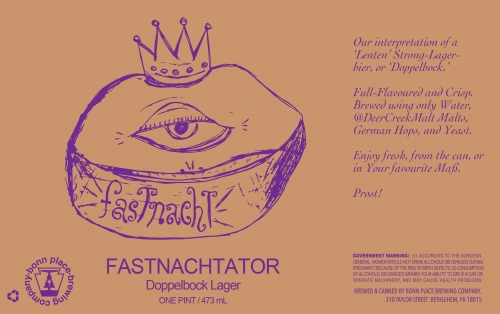
Bonn Place crafts the Fastnachtator entirely from Deer Creek malt, a Pennsylvania maltster that sources locally grown grain. Masotto prioritizes local Pennsylvania malt and hops for seasonal beers like the Fastnachtator, where the ingredients can truly shine. The result is a doppelbock rooted in place. It tastes like the German style should — rich, caramel-forward, smooth — but with a locally sourced grain character that sets it apart from the imports. This one is a great bridge between old-world tradition and Lehigh Valley craft brewing.
Schneider Weisse Aventinus — The Wheat Twist
Aventinus belongs to a sub-style called Weizendoppelbock. It brings wheat into the grain bill alongside barley. That changes everything. Schneider Weisse launched Aventinus in 1907, making it Bavaria’s oldest wheat doppelbock. Mathilde Schneider created it after taking over the brewery when her husband died young. She wanted a beer with more weight and impact. She nailed it.
Aventinus pours a dark ruby color with a creamy tan head. The aroma brings ripe bananas, raisins, plums, and hints of liquorice. The finish is full-bodied, warming, and smooth. The wheat yeast adds banana and clove character that a traditional barley doppelbock does not have. It reads more spiced and fruity than Salvator. If Salvator is the classic, Aventinus is the one that surprises you, also it runs 8.2% ABV. 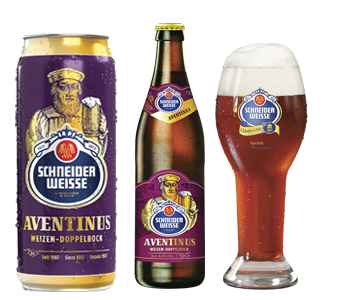
How to Drink a Doppelbock
Firstly, do not reach for a cold pint glass. Serving a doppelbock too cold mutes its complex aromas and flavors. The ideal serving temperature is 45–50°F. Pull it out of the fridge 15–20 minutes before drinking. Use a tulip glass, a snifter, or a traditional Pokal glass. All three trap the aroma and let the head form properly.
Drink it slowly. A doppelbock rewards patience. Meanwhile the flavor shifts as the beer warms slightly in your hand. The alcohol warmth builds gradually. This is not a chug-it beer. It is a sit-with-it beer.
What to Eat with Doppelbock Beer
The rich, malty sweetness of a doppelbock pairs best with food that can hold its own against it. Roasted meats like pork, venison, and duck work especially well. This beer’s caramel notes complement the caramelized crust on the meat. Hearty stews, aged Gruyère, and sharp cheddar also shine alongside it.
On the dessert side, doppelbock practically is dessert. Pair it with bread pudding, apple strudel, or anything featuring dark fruit and caramel.
Why Doppelbock Beer Belongs in Your Rotation
Doppelbock beer does not try to impress you with hops or novelty ingredients. It earns its place through centuries of tradition, exceptional malt craftsmanship, and a flavor profile that few other styles can match. Whether you start with Paulaner Salvator, explore the wheat-driven complexity of Aventinus, or support local with Bonn Place’s Fastnachtator, you are drinking something with real history behind it. Come in and ask for a doppelbock! Stay tuned for March Mildness!
Facebook Comments