

Why Is Guinness So Popular Right Now?
Walk into a bar almost anywhere in America right now and you will probably see a Guinness on the counter. Not just at Irish pubs. Mexican restaurants. Natural wine bars. Diners. The pint that spent decades being associated with older men and St. Patrick’s Day has become one of the most talked-about drinks in the country. That did not happen by accident. Several things hit at the same time — social media, a cultural shift, smart marketing, and honestly a beer that was always good and just needed more people to try it. Here is how Guinness went from familiar to unavoidable.
The Numbers First, Because They Are Striking
This is not just a feeling. The data backs it up completely.
Globally, Guinness sales grew 13% in the fiscal year ending June 2025, on top of 15% net sales growth the year before. That kind of back-to-back double-digit growth is rare for any consumer brand. In North America, net sales rose 6% in fiscal 2024, a strong number for a mature imported beer in a market that has seen overall beer volumes shrink.
In the UK, Guinness became the number one beer in the on-trade across 2024. One in every nine pints poured in the UK is now a Guinness, up from one in ten the year before. Diageo had to set allocation limits on kegs ahead of the 2024 holiday season in Britain because demand outpaced what breweries could supply. Philadelphia bar owner Fergie Carey, a Dublin native who has run his pub on Sansom Street for 30 years, went from about 10 kegs of Guinness per week to 20. At a bar in New York, Guinness outsells the rest of the menu by a six-to-one margin. These are real numbers from real bars, not projections.
Guinness is now the fastest-growing imported beer in the United States based on bar, restaurant, and brewery sales, according to Nielsen. Philadelphia ranks as one of its top five markets in the country alongside New York, Chicago, Boston, and Washington D.C.
What Actually Drives a Beer Trend? Usually More Than One Thing.
Here is where it gets interesting. Beer trends tend to be driven by novelty — a new style catches fire, breweries race to produce it, drinkers move on. Guinness is the opposite of that. It has been brewed at St. James’s Gate in Dublin since 1759. The recipe has not changed in any meaningful way in decades. There is no novelty here. So what explains it?
The honest answer is that several forces converged at the same time, and each one reinforced the others.
 Split the G: The Trend That Nobody Planned
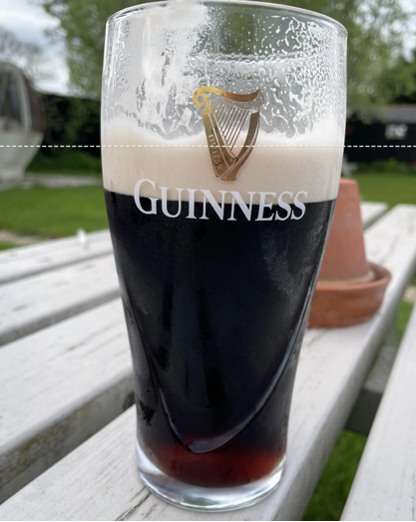 Split the G: The Trend That Nobody Planned
The most visible piece of the Guinness boom is a pub game that predates social media by decades. To split the G, you take your first sip of a freshly poured Guinness and try to land the foam line exactly in the middle of the “G” on the branded pint glass. Miss high or low and you owe yourself another round. It sounds simple. It takes real coordination.
The challenge had been a thing in Irish and British pubs for years before it found the internet. The first entry on Urban Dictionary goes back to 2018. By 2021 and 2022 it started showing up on TikTok and Instagram. By late 2024 it peaked, with searches hitting maximum levels on Google Trends and celebrities like Ed Sheeran, Niall Horan, John Cena, Paul Mescal, Jason Momoa, and the Jonas Brothers all posting attempts.
None of this came from Guinness. Colm O’Connor, a Guinness Brewery Ambassador, described it as something he imagined being dreamed up on TikTok — and noted clearly that it is not an official Guinness initiative. The brand did not launch a campaign around it. They did not pay influencers to seed it. A pub game that had existed for years just happened to be perfectly suited to short-form video, and drinkers ran with it.
That kind of earned media is worth more than anything a marketing budget can buy. One video of Ed Sheeran attempting to split the G backstage on tour with Niall Horan pulled 684,000 likes. Nobody at Guinness approved that post.
The Irish Cultural Moment
The Split the G trend did not exist in a vacuum. It arrived alongside a broader wave of Irish cultural relevance that has been building in the US for several years.
Actor Paul Mescal became one of the most talked-about figures in film. Author Sally Rooney’s novels found enormous readerships in America. Musician Hozier, actress Saoirse Ronan, and actor Barry Keoghan all contributed to a version of Ireland that felt contemporary, cool, and worth paying attention to. Even Olivia Rodrigo wore a “Guinness is Good 4 U” shirt during her May 2024 show in Dublin — a nod to one of the brand’s oldest slogans alongside one of her own song titles.
Oran McGonagle, co-owner of the Dubliner in Boston, put it directly: Irish culture is having a big resurgence, and Guinness is riding that wave. The beer was not especially trendy in Ireland itself when McGonagle lived there. It just benefits from the fact that Ireland is suddenly exactly where American cultural attention has landed.
Philadelphia sales reflect this too. Younger customers who had spent time in Ireland came back wanting more Guinness more often, according to Jerome Donovan, co-owner of the Plough & the Stars in Old City. The travel connection matters. People experience Guinness properly in Ireland — cold glass, patient pour, creamy head — and come home wanting to find that again.
A Beer That Was Always Misunderstood
Here is something worth addressing directly. A lot of people assume Guinness is heavy, high in calories, and hard to finish a second pint of. That reputation is wrong, and it has been wrong for a long time.
A 12-ounce Guinness Draught has about 125 calories. A 12-ounce standard lager averages around 153. Guinness is lower in calories than Stella Artois, Sam Adams Boston Lager, and most IPAs. At 4.2% ABV, it is comparable in strength to Michelob Ultra.
The darkness does not mean heaviness. The roast character comes from unmalted barley kilned at high temperatures, which produces the coffee and chocolate notes you taste. The nitrogen pour creates that creamy, cascading texture and dense head — not thickness. The beer finishes dry and clean. Once people actually drink one, most are surprised by how easy it goes down.
Guinness’s US brand director Joyce confirmed that younger drinkers have become aware of this. The calorie and ABV reality is a genuinely persuasive discovery for people who had avoided it for years.
Who Is Actually Drinking It Now
The demographic shift inside this boom is the most significant long-term story. Guinness penetration among women rose 86% in the UK in a recent study. The brand saw a 24% rise in female customers globally. In Great Britain, Guinness consumption among women rose 27% from fiscal 2022 to 2023 alone. Penetration among drinkers under 34 rose 70%.
Guinness Global Brand Director Stephen O’Kelly called the last five years remarkable for the brand’s growth and described what the brand is living through as a golden age. That language would sound like PR spin if the sales data did not completely support it.
For decades, the prototypical Guinness drinker was an older Irish man. Today, bar owners across Philadelphia, New York, and Chicago describe looking down the bar and seeing groups of young people — men and women together — ordering rounds of Guinness as if that were the most natural thing in the world. According to Mick O’Donoghue, co-owner of Kerryman in Chicago, Guinness sales at his bar are up between 40 and 50 percent over the last two years. “It’s definitely got a new lease on life,” he said.
What Guinness Actually Did Right
It would be easy to credit this all to luck or timing. But Guinness and its parent company Diageo made real strategic decisions that positioned the brand to capitalize on its moment.
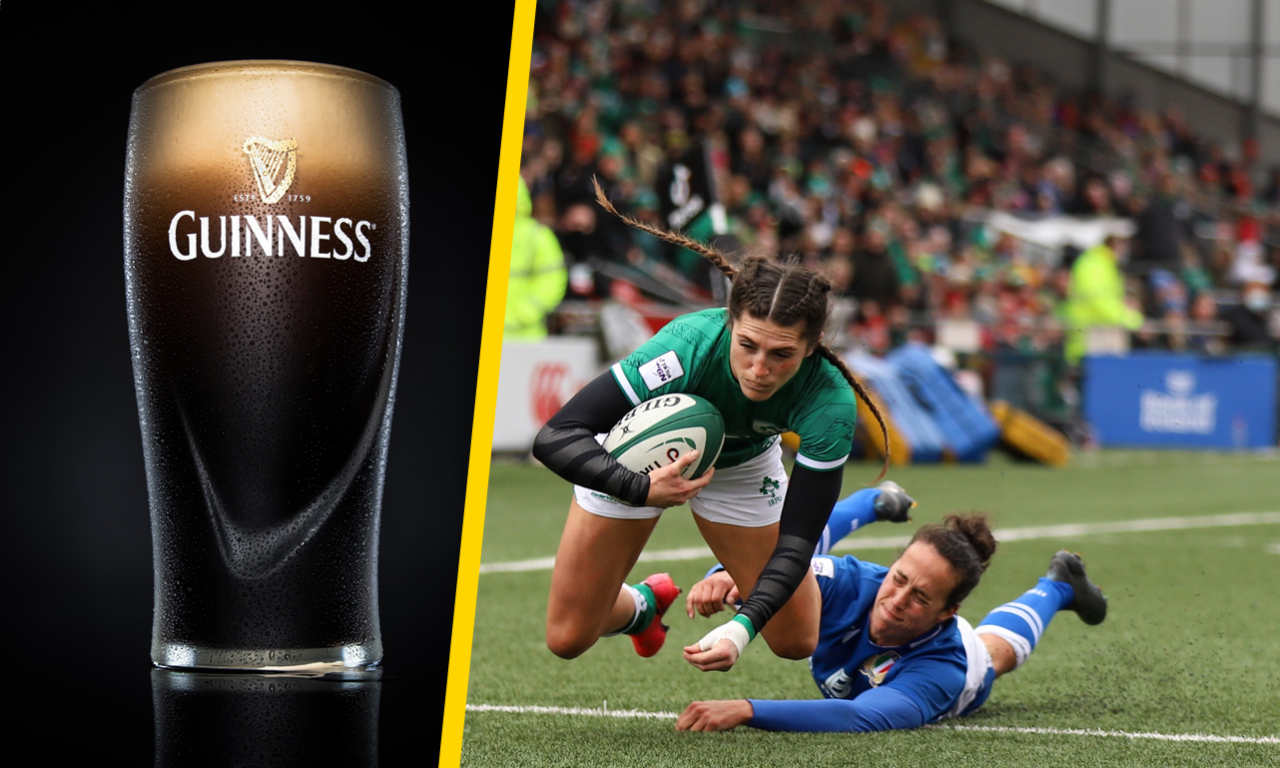 They invested in the Premier League and rugby partnerships, which put Guinness branding in front of enormous audiences every weekend and ties the beer to live sport rather than just Irish heritage. They expanded US brewery presence, opening a taproom in Chicago’s West Loop in 2023. They pushed Guinness 0.0, their non-alcoholic version, hard into a market hungry for NA options — and it worked. Net sales and volume of Guinness 0.0 more than doubled in Europe in fiscal 2024.
They also played the influencer ecosystem correctly by not playing it too hard. Rather than manufacturing content, they focused on product quality and let fans do the work. The result was that when the viral moments came, they came from genuine enthusiasm rather than paid promotion. That authenticity is nearly impossible to fake.
Why Philadelphia Is a Perfect Guinness Market
It is worth saying directly: Philadelphia is one of the top Guinness markets in the country. That tracks. The city has deep Irish-American roots, a strong bar culture, and the kind of drinkers who appreciate a well-poured pint.
Fergie’s on Sansom Street has been doubling its Guinness volume. The Plough & the Stars in Old City has been a top Guinness seller in the city for years. From Delaware County to South Jersey, Irish pubs and neighborhood bars are all reporting the same thing. Demand has gone up. New faces are at the bar. The pint is having its moment here the same as everywhere else — maybe more.
If You Like Guinness, Try These Alternatives
Boulevard Nitro Cream – Nitro Milk Stout (slightly sweeter)
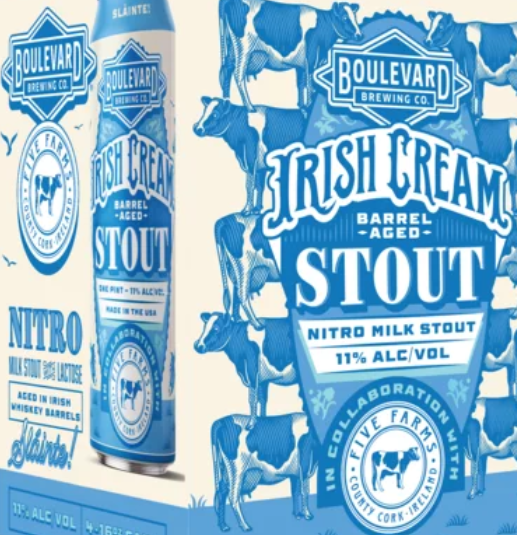
Bonn Place Daft – Chocolate Oatmeal Stout
Dancing Gnome Garavogue – Irish Dry for Yinz
Murphys – less bitter
OHaras – more coffee and robustness
Lawsons Nitro Stout – authentic irish malts with nitrogen during canning
Tonewood Still Night – low abv, very sessionable
Foam Rainy Night in Soho – Irish Dry, 4.1 Untappd
The Bottom Line
Guinness earned this. A 265-year-old beer does not get its golden age by accident. The viral trend opened a door. The cultural moment brought new people through it. The product kept them coming back. And bar owners from Ambler to Chicago to London are still trying to keep up with the kegs.
It was always a great pint. A lot of people just needed a reason to try it.
Facebook Comments