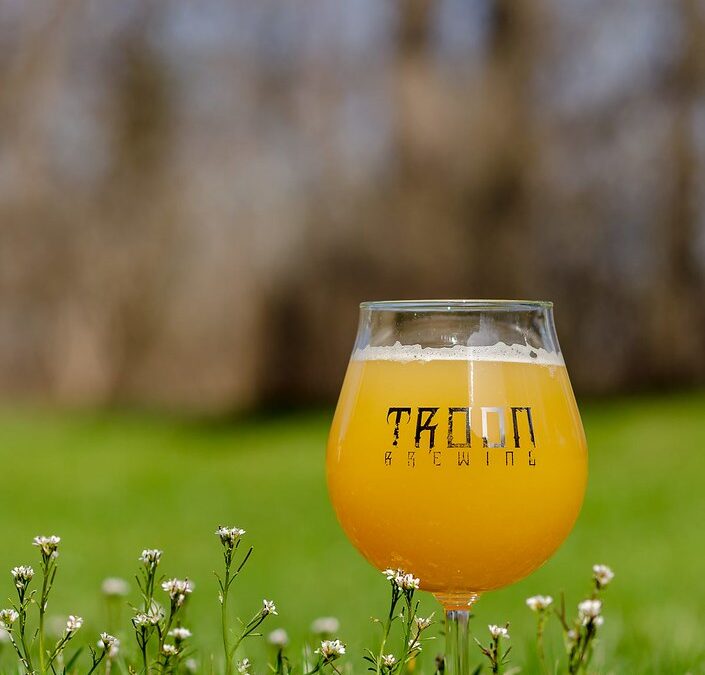
If you’ve spent any time shopping for craft beer, you’ve probably seen both Hazy IPA and New England IPA on cans. Sometimes a brewery uses one term, sometimes the other, and sometimes it uses both. So, what’s the difference?
In most cases, there’s little difference. Hazy IPA and New England IPA, often shortened to NEIPA, generally describe the same family of beer: hop-forward IPAs known for their cloudy appearance, fruit-like aromas, and softer bitterness. They have a square rectangle type of relationship: not all hazys are New England IPAs vs all NEIPAs are hazy IPAs
The names aren’t completely interchangeable in every context, though. New England IPA refers to the style’s regional roots and the brewing approach associated with it. Hazy IPA describes the beer’s appearance and has become a broader, widely used label.
That distinction sounds small, but it explains why a brewery might call its beer a NEIPA while another labels a very similar beer a hazy IPA. It also explains why two beers carrying the same label can taste surprisingly different.
What Is a New England IPA?
New England IPA developed as a modern variation of American IPA, with the style becoming popular during the 2010s. Breweries in New England helped establish the approach, and the style spread well beyond the region.
The idea was to make an IPA that emphasized hop aroma and flavor without the sharp bitterness associated with many traditional American IPAs. Brewers leaned into fruit-forward hops, later additions of hops during brewing, and recipes that produced a fuller, softer texture.
The result was a beer that could smell like orange, mango, pineapple, peach, or other fruit without necessarily containing any fruit at all. Those aromas often come from the hops themselves, supported by the yeast and the rest of the recipe.
The BJCP describes the style as intensely fruity, soft-bodied, and heavily hopped, with less perceived bitterness than traditional IPAs. It also identifies New England IPA and NEIPA as alternative names for Hazy IPA. So does Untappd, the popular beer rating site, which makes things confusing while at the same time showing how similar they are.
That doesn’t mean every NEIPA tastes sweet or resembles fruit juice. A well-made example still tastes like beer. The malt, hops, and fermentation need to work together rather than letting one element overwhelm everything else.
What Makes an IPA Hazy?
The obvious answer is that it looks cloudy instead of clear. But haze isn’t a flavor, and it doesn’t automatically tell you whether a beer is good.
In a typical New England-style IPA, haze develops through interactions between proteins from the grain and compounds from the hops. Brewers often use ingredients such as oats or wheat to help create the texture and appearance they’re after. They also add substantial amounts of hops later in the brewing process, which contributes to the beer’s aroma and can contribute to its haze.
The appearance is only part of the story. The goal is usually a combination of intense hop flavor, a softer feel in the mouth, and less sharp bitterness than you’d expect from many West Coast IPAs.
There’s an important catch, though: not every hazy beer is a New England IPA, and not every beer labeled Hazy IPA follows the same recipe. Some are lighter and easier drinking. Others are stronger, fuller, and packed with hops. A beer can also be somewhat hazy without being intended as a NEIPA.
Haze alone doesn’t tell you what you’re going to taste.
So, Is Hazy IPA Different From NEIPA?
This is where the terminology gets a little messy.
The BJCP treats the terms as alternative names for the same style. The Brewers Association also groups these beers under a category called Juicy or Hazy India Pale Ale, emphasizing their hop aroma, fruit-like flavors, and often softer bitterness.
In everyday brewery marketing, however, hazy can be used more broadly. A brewery might use it to describe an IPA’s appearance and general flavor profile without claiming it follows the New England tradition particularly closely.
Think of it this way:
- NEIPA: Usually signals a New England-inspired IPA, with a fruit-forward hop profile, noticeable haze, and a softer feel.
- Hazy IPA: Often means much the same thing, but the term can be used more broadly.
- Juicy IPA: Emphasizes the fruit-like hop flavor and aroma. It often overlaps with both terms, although a beer doesn’t have to be heavily hazy to taste juicy.
These labels are useful starting points, not guarantees. Breweries don’t all use style names with the same level of precision, and the boundaries between modern IPA styles have become increasingly blurry. Ultra hopped ales are a new style emerging and it is unwise to confuse it with your run-of-the-mill hazy ipa.
Does a Hazy IPA Taste Different From a West Coast IPA?
This comparison is often more useful than trying to separate Hazy IPA from NEIPA.
West Coast IPAs generally put more emphasis on bitterness, a drier finish, and hop flavors such as grapefruit, pine, and resin. Hazy IPAs tend to emphasize fruit-forward hop aromas, a fuller texture, and less perceived bitterness.
That doesn’t mean West Coast IPAs can’t taste fruity or that hazy IPAs can’t be bitter. Both styles can use many of the same hop varieties. The difference comes from how the brewer builds the recipe and balances the finished beer.
Here’s a simple comparison:
| Feature | Hazy IPA / NEIPA | West Coast IPA |
|---|---|---|
| Appearance | Usually cloudy | Usually clear, though some haze is possible |
| Common flavors | Mango, peach, orange, pineapple | Grapefruit, pine, citrus, resin |
| Bitterness | Often softer | Often more pronounced |
| Texture | Often fuller and softer | Often lighter and drier |
| Overall impression | Fruit-forward and rounded | More direct hop bite and a drier finish |
These are general tendencies, not hard rules. Some modern West Coast IPAs are fruit-forward, and some hazy IPAs have plenty of bitterness. Still, this comparison is a helpful way to figure out which direction you prefer.
Why Do Some Hazy IPAs Taste Like Juice?
It’s a fair question, especially when a beer smells strongly of mango, pineapple, orange, or passion fruit.
A lot of that character comes from hops. Different varieties contribute different combinations of citrus, tropical fruit, stone fruit, floral, or other aromas. Yeast can also contribute fruity notes during fermentation.
Brewers can emphasize these flavors by choosing particular hops and adding them later in the process, when aroma and flavor are the priority rather than extracting as much bitterness as possible.
The grain bill matters, too. Oats and wheat can contribute to the fuller texture often associated with hazy IPAs. When that texture combines with fruit-forward hop character and restrained perceived bitterness, the beer can seem almost juicy.
But a juicy flavor doesn’t necessarily mean the beer is sweet. Some hazy IPAs finish relatively dry, while others leave a softer, slightly sweeter impression. Alcohol strength, the recipe, and the specific hops all play a part.
And if a can tastes like actual fruit, check the label. Some beers do contain fruit or other flavoring ingredients, but that isn’t a requirement for the hazy IPA style.
What Should You Look for When Buying a Hazy IPA?
If you’re choosing between a few cans, the style name is a useful start, but there are better clues about what you’ll get.
Read the flavor description. Words like mango, peach, pineapple, orange, and passion fruit suggest a fruit-forward hop profile. Grapefruit, pine, and resin may point toward a sharper or more traditional hop character, although there is plenty of overlap.
Check the alcohol content. A hazy pale ale may have a similar flavor profile to a hazy IPA but be lighter in alcohol. Double or imperial hazy IPAs are generally stronger and can have a fuller body. Don’t assume a beer is stronger just because it tastes intense.
Look at the brewery’s description of the beer. If you prefer a softer, less bitter IPA, descriptions emphasizing juicy fruit, a smooth texture, or New England style can help. If you want more bitterness, look for descriptions that mention a drier finish or a stronger bitter edge.
Pay attention to freshness. Hop aroma can fade over time, particularly in heavily hopped beers. Check the packaging date when it’s available, and keep your beer cold after purchase. A hazy IPA that has lost much of its hop aroma may taste very different from the beer the brewer intended.
Finally, don’t get too hung up on the label. If you find a hazy IPA you love, the brewery’s other releases may be worth exploring even if they use slightly different terminology.
The Bottom Line: Hazy IPA vs. NEIPA
Hazy IPA and New England IPA usually mean the same general thing. NEIPA points toward the style’s New England roots, while Hazy IPA is a broader label that describes the beer’s appearance and often its overall profile.
Neither name guarantees a specific flavor, bitterness level, or alcohol content. The recipe matters more than the wording on the can.
If you’re trying to find your next favorite IPA, look beyond the style name. The brewery’s flavor description, the beer’s strength, its freshness, and the hop profile will tell you much more about what you’re buying.
Sources
- Beer Judge Certification Program: 2021 Beer Style Guidelines, Hazy IPA
- Brewers Association: 2026 Beer Style Guidelines
Facebook Comments